Healthy Breakfast for Kids: Nutritious Morning Meals for Growth


A healthy morning meal plays an important role in a child’s growth, learning ability, and daily energy levels. After a long night of sleep, children need a balanced breakfast that provides essential nutrients like carbohydrates, protein, healthy fats, vitamins, and minerals. Choosing the right foods in the morning can improve concentration at school, support physical activity, and help maintain healthy eating habits from an early age. Many children often skip breakfast because they are busy or prefer quick snacks, but a nutritious meal can make a big difference in their overall health. Parents can prepare simple and delicious options that children enjoy while ensuring they receive the nutrition their growing bodies need. A well-planned healthy breakfast for kids does not have to be complicated; it can include everyday ingredients prepared in creative ways.
Why Breakfast Is Important for Children
Breakfast is often called the most important meal of the day because it provides the fuel children need after overnight fasting. Kids use a lot of energy throughout the day for studying, playing, and exploring new activities. Without a proper breakfast, children may feel tired, lose focus, or become less active during the day. A nutritious morning meal helps maintain steady energy levels and supports brain function.
A balanced breakfast also helps children develop better food choices as they grow. When kids regularly eat wholesome foods in the morning, they are more likely to choose healthier options later in life. Foods rich in protein, fiber, and essential nutrients help children stay full for longer and reduce cravings for unhealthy snacks. Including a healthy breakfast for kids in their daily routine can support physical development and create positive eating habits.
Essential Nutrients Needed in a Kids’ Breakfast
A child’s breakfast should contain a combination of different nutrients to support growth and development. Carbohydrates provide energy for daily activities, while proteins help build and repair body tissues. Healthy fats are important for brain development, and vitamins and minerals strengthen immunity and overall health.
Whole grains such as oats, whole wheat bread, and homemade cereals provide long-lasting energy because they contain fiber. Protein sources like eggs, milk, yogurt, nuts, and beans help children feel satisfied and support muscle growth. Fruits and vegetables add important vitamins, antioxidants, and minerals to the meal. Combining these food groups creates a complete breakfast that supports children’s nutritional needs.
Parents should avoid breakfasts that are high in sugar and low in nutrients. Packaged snacks, sugary cereals, and sweet drinks may provide quick energy but often lead to tiredness later. Instead, choosing fresh and natural ingredients can make breakfast healthier and more beneficial.
Easy Healthy Breakfast Ideas for Kids
Preparing nutritious breakfast options does not require spending hours in the kitchen. There are many simple recipes that are both tasty and healthy for children. Oatmeal topped with fresh fruits and nuts is a great option because it provides fiber, vitamins, and energy. Parents can also prepare vegetable sandwiches using whole wheat bread for a quick and filling meal.
Egg-based dishes like scrambled eggs, boiled eggs, or vegetable omelets are excellent sources of protein. For children who enjoy dairy products, yogurt with fruits and seeds can be a refreshing breakfast choice. Smoothies made with milk, bananas, berries, and nuts can also provide important nutrients in a kid-friendly form.
A healthy breakfast for kids can include traditional homemade foods as well. Options like vegetable poha, idli with healthy chutney, stuffed parathas with yogurt, or homemade pancakes can be nutritious when prepared with balanced ingredients. The key is to combine taste with nutrition so children enjoy their meals.
Protein-Rich Breakfast Options for Growing Kids
Protein is an essential nutrient for children because it supports muscle development, growth, and repair. Including protein-rich foods in breakfast can help children stay active and energetic throughout the day. Eggs, milk, paneer, yogurt, nuts, seeds, and legumes are excellent protein sources.
A breakfast containing enough protein can also improve feelings of fullness, preventing children from becoming hungry too quickly. For example, a peanut butter sandwich made with whole grain bread or a bowl of yogurt with fruits can provide a good balance of protein and energy.
Vegetarian families can include options like moong dal chilla, paneer sandwiches, sprouts, and soy-based foods. These choices provide important nutrients while keeping meals interesting. Adding different protein sources throughout the week ensures children receive a variety of nutrients necessary for healthy development.
Importance of Fruits and Vegetables in Breakfast
Fruits and vegetables are important parts of a balanced breakfast because they provide vitamins, minerals, and antioxidants. These nutrients help strengthen the immune system and protect children from common illnesses. Fruits also add natural sweetness to meals, making healthy foods more appealing to kids.
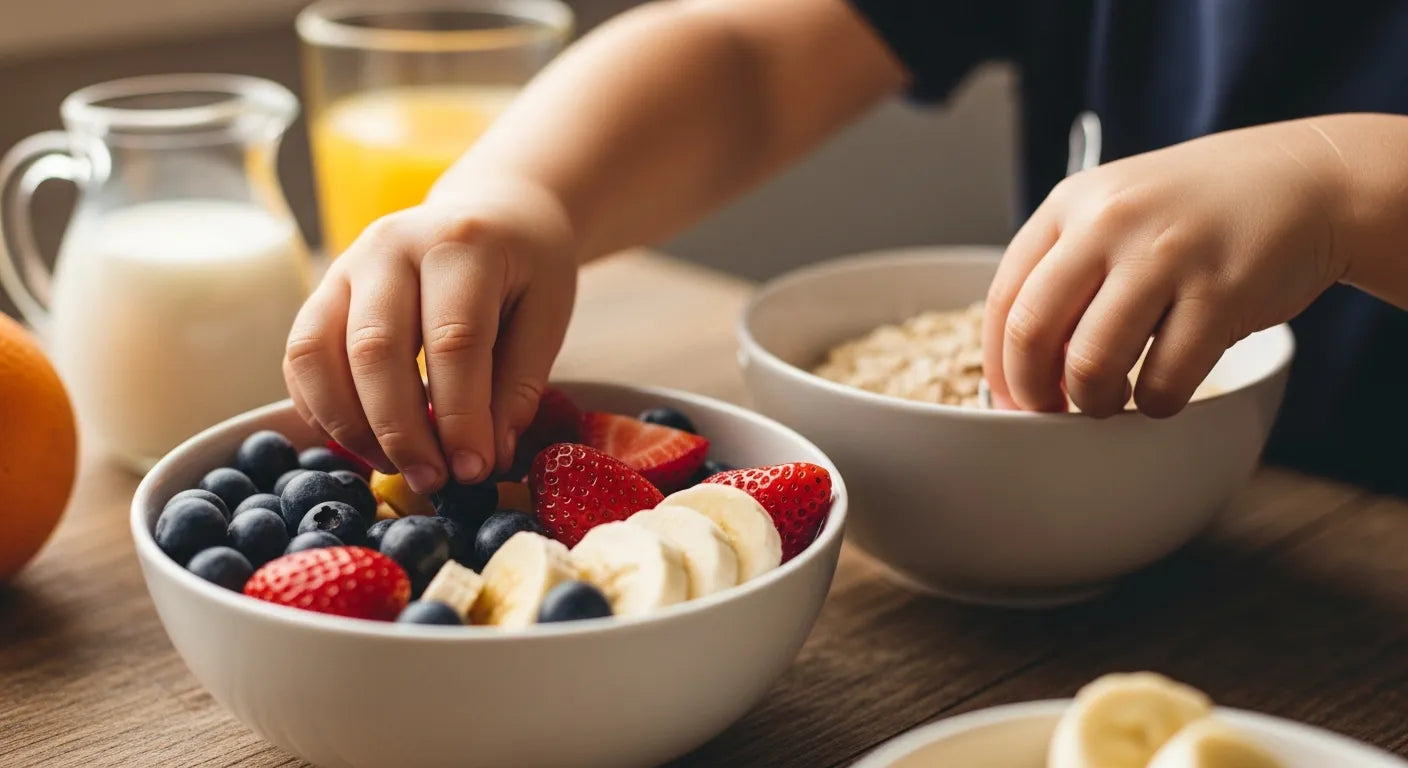
Parents can encourage children to eat fruits by adding sliced bananas, apples, berries, mangoes, or oranges to breakfast plates. Vegetables can be included through sandwiches, omelets, parathas, and savory dishes. Colorful meals often attract children and encourage them to try different foods.
Creating a habit of including fruits and vegetables in the morning helps children develop healthier eating patterns. A balanced healthy breakfast for kids should always include nutrient-rich ingredients that support their growing bodies and keep them active.
Quick Breakfast Ideas for Busy School Mornings
Busy mornings can make it challenging for parents to prepare elaborate meals, but quick and healthy options are still possible. Preparing ingredients in advance can save time and make breakfast preparation easier. Overnight oats, fruit bowls, boiled eggs, and homemade muffins can be prepared ahead of time.
Parents can also create a weekly breakfast plan to avoid last-minute unhealthy choices. Simple meals like smoothies, whole grain toast, vegetable wraps, and yogurt bowls can be made quickly without compromising nutrition.
Children often prefer meals that look attractive and taste good. Using different shapes, colors, and creative presentations can make healthy foods more enjoyable. Even a simple breakfast can become exciting when prepared with care and variety.
Foods to Avoid in Kids’ Breakfast
While occasional treats are acceptable, certain breakfast foods should not become regular choices. Foods high in added sugar, artificial ingredients, and unhealthy fats may negatively affect children’s energy levels and eating habits. Sugary cereals, packaged pastries, soft drinks, and processed snacks often lack essential nutrients.
Instead of relying on processed foods, parents can choose homemade alternatives. For example, homemade granola, fruit smoothies, and whole grain recipes can provide better nutrition. Reading food labels and choosing natural ingredients can help families make smarter decisions.
Teaching children about healthy eating from an early age helps them understand the importance of nutritious choices. A balanced approach ensures that children enjoy their favorite foods while still maintaining a healthy lifestyle.
Tips to Encourage Kids to Eat Breakfast
Some children may refuse breakfast because they are not hungry early in the morning or dislike certain foods. Parents can encourage better eating habits by offering smaller portions and allowing children to choose from healthy options. Involving kids in meal preparation can also increase their interest in trying new foods.
Creating a regular breakfast routine helps children understand the importance of starting the day with proper nutrition. Eating together as a family whenever possible can make breakfast a positive experience.
Parents should focus on variety rather than forcing children to eat specific foods. Offering different nutritious choices allows children to discover their preferences while still receiving essential nutrients. A consistent healthy breakfast for kids routine can support better health and development over time.
Conclusion
A nutritious breakfast provides children with the energy, focus, and nutrients they need for a successful day. Choosing balanced meals with whole grains, proteins, fruits, vegetables, and healthy fats can support growth and overall well-being. Parents can create enjoyable breakfast routines by preparing simple, delicious, and creative meals that children love.
The best healthy breakfast for kids includes variety, freshness, and proper nutrition. Small changes in daily eating habits can make a big difference in children’s health, learning, and lifestyle. By making breakfast a priority, families can help children develop strong foundations for healthy living.
Read More:- How Many Pumpkin Seeds Per Day for Daily Health Benefits