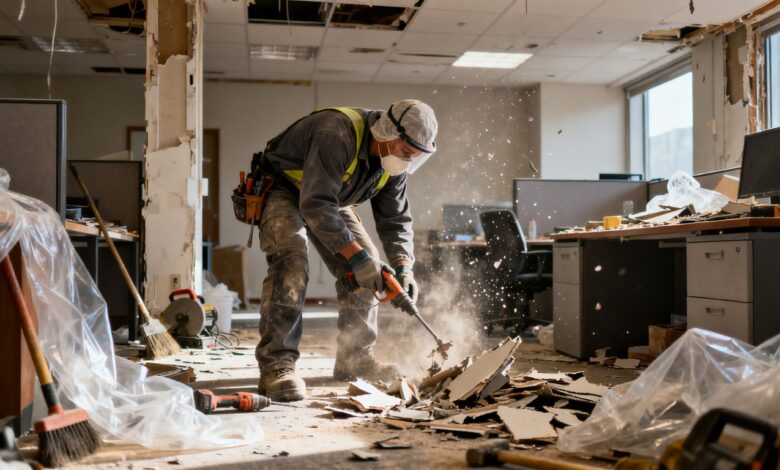
Office renovations, whether minor updates or major overhauls, can unexpectedly bring asbestos into the spotlight. Many commercial buildings constructed before the 1980s utilized asbestos in various building materials due to its fire-resistant and insulating properties. While these materials are generally safe when left undisturbed, renovation activities can easily disturb them, releasing harmful fibers into the air. This release poses a significant health risk to building occupants and workers.
Common Locations of Asbestos in Commercial Buildings
Asbestos can be found in a surprising number of places within an office environment. Awareness of these common locations is the first step in identifying potential risks during renovation projects:
- Flooring: Vinyl floor tiles, sheet flooring, and the adhesives used to secure them often contain asbestos.
- Ceilings: Acoustic ceiling tiles, spray-on coatings, and the materials used in suspended ceiling systems can be sources of asbestos.
- Insulation: Pipe insulation, boiler wrap, and insulation around HVAC systems frequently contain asbestos.
- Walls and Coatings: Drywall joint compound, textured paints, and fireproofing materials applied to structural elements may contain asbestos.
- Other Areas: Gaskets, seals, and even some older electrical components can also be asbestos-containing.
Why Renovations Trigger Asbestos Concerns
Renovation work inherently involves disturbing building materials. Tasks such as demolition, cutting, drilling, sanding, or even simple cleaning can dislodge asbestos-containing materials (ACMs). When ACMs are damaged or broken apart, microscopic asbestos fibers are released into the air. These airborne fibers can then be inhaled, leading to serious long-term health issues. Even seemingly minor tasks like removing old flooring or updating electrical wiring can inadvertently expose workers and tenants to these hazardous fibers if proper precautions are not taken. For any significant renovation, understanding the potential for asbestos is key to safe project execution.
The Risk of Undisturbed Asbestos Materials
It is important to note that asbestos-containing materials that are in good condition and remain undisturbed typically do not pose a health risk. The danger arises when these materials are damaged, deteriorate over time, or are disturbed during renovation or maintenance activities. When ACMs are compromised, they can release fibers that, when inhaled, can lead to severe respiratory diseases, including asbestosis, lung cancer, and mesothelioma, often many years after exposure. Therefore, before any renovation begins, a thorough assessment is necessary to identify and manage any potential asbestos hazards.
Identifying Potential Asbestos Risks
When planning office renovations, it’s important to consider the possibility of asbestos being present, especially in older buildings. You can’t always see asbestos just by looking at materials, but there are signs that might indicate its presence. Paying attention to these can help identify potential risks before work begins.
Signs of Asbestos-Containing Materials
While a definitive identification requires professional testing, certain visual cues can raise suspicion. These often relate to the condition and type of building materials:
- Condition of Materials: Look for materials that are cracked, crumbling, peeling, or showing signs of wear. For example, damaged ceiling tiles, chipped cement boards, or deteriorating pipe insulation are common indicators.
- Texture and Appearance: Some asbestos-containing materials have a distinctive texture. This can include sprayed-on fireproofing, textured paints or coatings, or older types of insulation that appear fibrous or dusty.
- Location: Certain building components were historically more likely to contain asbestos. These often include floor tiles and their adhesive, roofing and siding materials, and insulation around boilers and pipes.
The Role of Building Age
The age of the building is one of the most significant factors in assessing asbestos risk. Buildings constructed or renovated before the 1980s are more likely to contain asbestos-containing materials. This is because asbestos was a common additive in many building products for its fire-resistant and insulating properties. If your office space was built during this era, it’s prudent to assume asbestos may be present until proven otherwise through testing. Even buildings renovated with older materials from that period could still pose a risk.
When to Suspect Asbestos Presence
Several scenarios should prompt a higher level of suspicion regarding asbestos. Renovations themselves are a primary trigger, as any disturbance to building materials can release fibers. Specific situations include:
- During Renovation or Demolition: Any work that involves cutting, drilling, sanding, or removing walls, ceilings, floors, or pipes can disturb asbestos. This is particularly true for tenant build-outs or changes to the office layout.
- Visible Damage: If you notice materials that appear damaged, such as sagging ceiling tiles, cracked plaster, or worn insulation, it’s a reason to be concerned.
- Maintenance Activities: Routine maintenance, like HVAC system repairs or plumbing work, can also disturb asbestos-containing materials if they are present and not properly identified beforehand. Understanding these potential risks is the first step toward safe renovation practices. Landlords are not always required to disclose asbestos before a tenant moves in, making tenant awareness even more important.
Legal and Regulatory Obligations
Understanding the legal landscape surrounding asbestos is vital for both property owners and tenants, especially when renovations are planned. Federal and state laws lay out specific requirements to protect occupants from potential asbestos exposure.
Landlord Responsibilities for Asbestos Management
Property owners and managers carry significant legal duties regarding asbestos. Their primary obligation is to ensure the building is safe for occupants. This involves several key actions:
- Identification and Assessment: Landlords are generally required to identify and assess the presence of asbestos-containing materials (ACM) within their properties, particularly in older buildings. This often necessitates professional inspections.
- Notification: In many jurisdictions, landlords must inform tenants about the presence of asbestos, especially if it’s in a condition that could pose a risk or if renovations are planned.
- Safe Management: If asbestos is present, landlords must implement measures to manage it safely. This includes following specific work practices during renovations or repairs to prevent fiber release. For buildings constructed before 1981, federal rules under OSHA often apply, requiring owners to locate existing asbestos and adhere to safety guidelines during any work.
- Record Keeping: Building owners must retain asbestos inspection reports and management plans throughout their ownership and transfer them to new owners upon sale. This ensures continued awareness and management of asbestos hazards in properties. [e71f]
Tenant Rights and Responsibilities
Tenants also have rights and responsibilities concerning asbestos. While landlords are primarily responsible for management, tenants should be aware of their situation.
- Right to Information: Tenants generally have a right to be informed about known asbestos hazards in their rented space. If a landlord fails to disclose known risks, tenants may have recourse.
- Reporting Concerns: Tenants should report any signs of damaged materials that might contain asbestos to their landlord promptly. Prompt reporting is key to preventing further deterioration and potential exposure.
- Avoiding Unauthorized Work: Tenants should avoid undertaking renovations or alterations themselves, especially in older buildings, as this can inadvertently disturb asbestos and lead to legal liability and health risks. Tenants can face serious health risks from environmental hazards like asbestos, and landlords are legally responsible for ensuring their properties are safe and protecting tenants from these dangers. [e99b]
- Lease Implications: If asbestos creates an unsafe or uninhabitable living condition and the landlord fails to address it after notification, tenants may have grounds to break their lease, depending on local laws and the severity of the hazard.
Federal and State Asbestos Regulations
Both federal and state governments have established regulations to control asbestos exposure. These regulations often overlap and can sometimes be more stringent at the state or local level.
- Federal Regulations: Agencies like the Environmental Protection Agency (EPA) and the Occupational Safety and Health Administration (OSHA) set standards. The EPA’s National Emission Standards for Hazardous Air Pollutants (NESHAP) governs asbestos during renovation and demolition activities. OSHA sets workplace safety standards, including those for asbestos exposure for workers.
- State and Local Laws: Many states and municipalities have their own asbestos regulations that may be more detailed or stricter than federal requirements. These can cover aspects like licensing for asbestos professionals, specific notification procedures, and disposal methods. It is imperative to consult with local authorities or asbestos professionals to understand the specific rules applicable to your location and project.
Consequences of Non-Compliance
Failing to follow asbestos regulations during an office renovation isn’t just a technical problem—it comes with real risks for both owners and tenants.
Financial Penalties and Legal Liability
Ignoring asbestos rules can lead to large fines and even lawsuits. When someone skips required inspections or tries to hide asbestos issues, the penalties can build up fast. Depending on state and federal laws, building owners might see:
- Local or federal fines, which can be severe
- Costly lawsuits from tenants, employees, or contractors exposed to asbestos
- In some situations, possible criminal charges, especially where there’s clear negligence
After a series of public enforcement cases, it’s clear even contractors aren’t safe; for instance, there are documented cases such as asbestos violation fines for companies, showing how severe penalties can be.
Insurance Policy Implications
If asbestos management isn’t handled correctly, insurance coverage can quickly become complicated. Most policies require following all legal steps. If an owner or company skips tests, hires unlicensed contractors, or fails to document asbestos removal, insurers might:
- Deny claims for property damage or illness
- Cancel or refuse to renew the property’s policy
- Raise premiums for perceived higher risk
This leaves both owners and tenants exposed, especially if any asbestos fibers are later connected to health claims. Many don’t realize until it’s too late that asbestos compliance is often a requirement for any insurance payout.
Project Delays and Reputational Damage
When asbestos isn’t managed properly, construction can’t move forward. That means:
- Work stoppages while authorities investigate and test
- Required rework, adding weeks or even months to timelines
- Costs for relocating staff temporarily
It’s not just about lost time, either. News of asbestos mishandling spreads fast among tenants and local communities. Word gets out, and once a company’s reputation is damaged, it’s hard to rebuild. Partners and tenants start to see the building—and the owner—in a negative light.
Property owners need to remember: even if strict asbestos disclosure isn’t required in every state, courts can still hold them responsible for failing to provide safe conditions (landlord legal obligations). So the cost of ignoring the rules goes beyond a fine; it can have long-term effects on trust and business success.
Professional Asbestos Management
When asbestos is suspected or confirmed in an office building undergoing renovation, engaging professionals is not just recommended; it’s a necessity. Attempting to manage asbestos without proper training and equipment can lead to serious health risks and legal trouble. Professional asbestos management ensures that work is done safely and in compliance with regulations.
The Importance of Professional Testing
Before any renovation work begins, a thorough asbestos inspection by a certified professional is paramount. This testing identifies the presence, type, and location of asbestos-containing materials (ACM). Professionals use specialized tools and techniques to collect samples, which are then analyzed in accredited laboratories. This step is critical because:
- Visual inspection alone is insufficient; asbestos fibers are microscopic.
- Testing helps determine the condition of the ACM (e.g., whether it’s friable or non-friable).
- It provides the data needed for an accurate risk assessment and abatement plan.
Without proper testing, building owners and tenants might unknowingly disturb asbestos, releasing fibers into the air. This can lead to significant health hazards for occupants and workers, as well as potential legal penalties. For those in Florida, understanding local requirements for asbestos management surveys is particularly important.
Asbestos Abatement Procedures
If asbestos is found and needs to be removed or contained, professional asbestos abatement is required. This is a highly regulated process designed to prevent the release of asbestos fibers into the environment. Abatement typically involves several key steps:
- Containment: The work area is sealed off using plastic sheeting and negative air pressure systems to prevent fibers from escaping.
- Removal or Encapsulation: ACM is carefully removed by trained personnel wearing protective gear, or it is sealed (encapsulated) to prevent fiber release.
- Cleanup and Decontamination: The area is thoroughly cleaned, and all equipment and personnel are decontaminated.
- Air Monitoring: Continuous air monitoring is often conducted during abatement to ensure containment is effective.
Following these procedures is vital for protecting building occupants and the surrounding community. Federal regulations, such as those outlined in the Clean Air Act, provide specific guidelines for renovation and demolition projects involving asbestos.
Operations and Maintenance Programs
For asbestos-containing materials that are in good condition and do not require immediate removal, an Operations and Maintenance (O&M) program can be an effective management strategy. An O&M program is a plan that outlines procedures for safely managing ACM in place. It includes:
- Regular Inspections: Periodic checks to monitor the condition of ACM.
- Worker Training: Educating maintenance staff on how to work safely around ACM and what to do in case of accidental disturbance.
- Record Keeping: Maintaining detailed records of inspections, training, and any work performed on ACM.
The goal of an O&M program is to minimize the potential for fiber release during routine building operations and minor repairs. This approach helps manage asbestos risks over the long term without the need for full abatement, provided the materials remain undisturbed and in good condition.
Tenant and Owner Collaboration
When office renovations are planned, especially in buildings constructed before the 1980s, a strong partnership between tenants and owners is key to managing potential asbestos risks. This collaboration helps ensure that everyone involved understands the procedures and responsibilities, leading to a safer and more compliant project.
Clear Communication During Renovations
Open and consistent communication is the bedrock of any successful renovation, and it’s even more critical when asbestos might be present. Owners should proactively inform tenants about any planned renovations that could disturb building materials. This includes:
- Providing advance notice of the renovation schedule.
- Explaining the scope of work and potential areas that might be affected.
- Detailing the steps being taken to assess and manage asbestos risks.
- Establishing a clear point of contact for any questions or concerns.
Tenants, in turn, should voice any concerns they have and actively seek information. Understanding the potential presence of asbestos and the planned mitigation strategies is a shared responsibility. This dialogue helps prevent surprises and builds trust throughout the renovation process.
Documenting Asbestos Management
Keeping thorough records is vital for accountability and safety. Owners should maintain all documentation related to asbestos testing, risk assessments, and any abatement procedures performed. This documentation serves as proof of compliance with regulations and provides a clear history of the building’s asbestos management. Tenants have the right to request access to relevant documentation, particularly after abatement work is completed, to confirm that the area is safe. This might include air clearance testing results or reports from licensed asbestos professionals. Having these records readily available can prevent future disputes and provide peace of mind for all parties involved.
Shared Responsibility for Safety
While the ultimate legal responsibility for asbestos management often falls on the building owner, tenants play a role in maintaining a safe environment. This includes adhering to any temporary restrictions or safety protocols put in place during renovations. If tenants undertake any work themselves, even minor modifications, they must be aware of potential asbestos hazards and follow proper procedures. For instance, unauthorized alterations could inadvertently disturb asbestos-containing materials, leading to exposure risks and potential liability. Understanding the regulations, such as those found in federal NESHAP regulations, helps both parties recognize their obligations. Ultimately, a cooperative approach where both owners and tenants prioritize safety and follow established guidelines is the most effective way to navigate asbestos concerns during office renovations.
Helpful Resources

