Introduction
Exercise plays a vital role in maintaining overall health, improving strength, and supporting daily movement. Among the many bodyweight exercises available, lunges are considered one of the most effective lower-body movements. They require no equipment, can be performed almost anywhere, and provide numerous benefits for beginners and advanced fitness enthusiasts alike.
Many people entering the fitness world often ask, what is a lunge exercise and why trainers recommend it so frequently. The answer lies in its ability to build lower-body strength, improve balance, increase flexibility, and support functional movement patterns used in everyday life.
In this comprehensive guide, you will learn everything about lunges, including how to perform them correctly, the muscles they target, common mistakes, benefits, variations, and expert tips for getting the most out of your workouts.
What Is a Lunge?
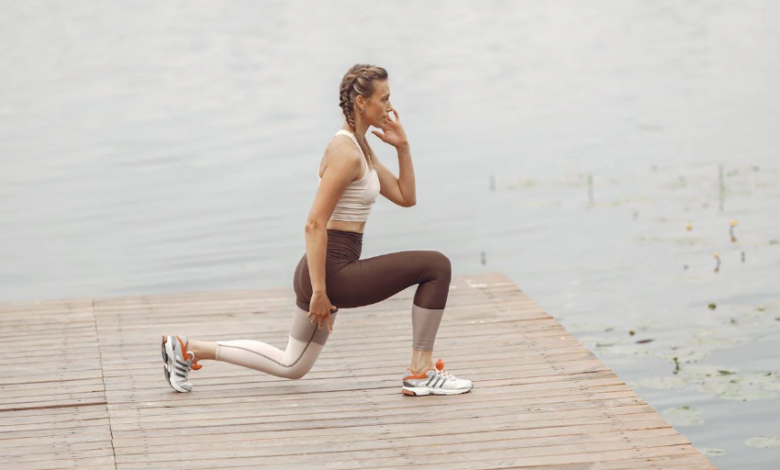
What is a lunge exercise? It is a lower-body strength training movement where one leg steps forward, backward, or sideways while the body lowers until both knees are bent. The exercise primarily targets the legs and glutes while also engaging the core for stability.
Lunges can be performed using body weight alone or with additional resistance such as dumbbells, kettlebells, barbells, or resistance bands.
Lunge Exercise at a Glance
| Feature | Details |
|---|---|
| Exercise Type | Strength Training |
| Difficulty Level | Beginner to Advanced |
| Main Muscles Worked | Quadriceps, Glutes, Hamstrings |
| Equipment Needed | None (Optional Weights) |
| Calories Burned | Moderate |
| Best For | Strength, Balance, Mobility |
| Training Goal | Muscle Building and Functional Fitness |
Why Lunges Are So Popular

Lunges have remained a staple in fitness programs for decades because they closely mimic everyday movements. Walking upstairs, getting up from the floor, and bending to pick up objects all involve similar movement patterns.
Unlike some gym machines that isolate a single muscle group, lunges train multiple muscles simultaneously. This makes them efficient and practical for people with busy schedules.
Another reason for their popularity is accessibility. Whether you’re working out at home, in a gym, or outdoors, lunges can easily fit into any fitness routine.
Understanding What Is a Lunge Exercise
To better understand what is a lunge exercise, imagine taking a large step forward and lowering your body until both knees form roughly 90-degree angles. The front leg supports most of your body weight while the rear leg assists with balance and movement.
The exercise creates tension in the lower body muscles, encouraging them to grow stronger over time.
Unlike squats, which distribute weight evenly between both legs, lunges challenge each leg independently. This helps correct muscular imbalances and improves coordination.
Muscles Worked During Lunges
One of the biggest advantages of lunges is the number of muscles involved.
Quadriceps
Located at the front of the thigh, the quadriceps help extend the knee and support movement during the upward phase of the exercise.
Gluteus Maximus
The glutes are heavily activated during lunges, especially when pushing back to the starting position.
Hamstrings
The hamstrings assist with hip movement and stabilize the lower body throughout the exercise.
Calves
Your calf muscles help maintain balance and provide support during stepping movements.
Core Muscles
The abdominal and lower back muscles work continuously to keep the torso upright and stable.
Hip Stabilizers
Smaller muscles around the hips play an important role in maintaining proper alignment and preventing injury.
Major Benefits of Lunges
1. Builds Lower-Body Strength
Lunges effectively strengthen the quadriceps, glutes, hamstrings, and calves. Stronger legs improve athletic performance and daily activities.
2. Improves Balance
Since lunges involve unilateral training (one side at a time), they challenge balance and coordination.
3. Enhances Mobility
Performing lunges through a full range of motion improves hip flexibility and joint mobility.
4. Corrects Muscle Imbalances
Many people unknowingly favor one side of their body. Lunges help identify and correct strength differences between legs.
5. Supports Functional Fitness
The movement pattern closely resembles natural activities like walking, climbing stairs, and standing from a seated position.
6. Increases Core Stability
Maintaining proper posture during lunges requires continuous core engagement.
7. Boosts Athletic Performance
Athletes benefit from stronger legs, improved balance, and better movement efficiency.
8. Can Be Done Anywhere
No gym membership is required. Lunges are highly versatile and suitable for home workouts.
How to Perform a Basic Forward Lunge
Learning correct form is essential before progressing to advanced variations.
Step 1
Stand tall with your feet hip-width apart.
Step 2
Keep your shoulders back and engage your core muscles.
Step 3
Take a large step forward with one leg.
Step 4
Lower your body until both knees are bent at approximately 90 degrees.
Step 5
Ensure the front knee stays aligned over the ankle.
Step 6
Push through the front heel to return to the starting position.
Step 7
Repeat on the opposite side.
Proper Lunge Form Checklist
Use this checklist every time you perform lunges:
✓ Keep your chest lifted
✓ Engage your core
✓ Look straight ahead
✓ Keep your front knee behind your toes
✓ Move slowly and with control
✓ Maintain balance throughout the movement
✓ Push through the heel when returning
Following these principles helps maximize results and reduce injury risk.
Common Mistakes to Avoid
Even though lunges appear simple, many people perform them incorrectly.
Letting the Knee Move Too Far Forward
Allowing the front knee to extend excessively beyond the toes can place unnecessary stress on the joint.
Leaning Forward
Excessive forward leaning shifts the workload away from the target muscles.
Taking Steps That Are Too Short
Short steps limit the range of motion and reduce effectiveness.
Poor Core Engagement
A weak or relaxed core can lead to instability and poor posture.
Rushing Through Repetitions
Controlled movements provide better muscle activation and reduce injury risk.
Different Types of Lunges
Once you’ve mastered the basic version, numerous variations can challenge your muscles in new ways.
Forward Lunge
The traditional variation commonly used by beginners.
Reverse Lunge
Instead of stepping forward, you step backward. Many people find this easier on the knees.
Walking Lunge
Move continuously across a space by alternating steps.
Side Lunge
Step laterally to target the inner and outer thigh muscles.
Curtsy Lunge
Cross one leg behind the other to increase glute activation.
Jumping Lunge
An advanced plyometric version that develops explosive power.
Weighted Lunge
Hold dumbbells or a barbell to increase resistance.
Bulgarian Split Squat
A challenging variation where the rear foot is elevated on a bench.
Who Should Perform Lunges?

Lunges are suitable for a wide range of individuals.
Beginners
Bodyweight lunges provide a simple introduction to strength training.
Athletes
Sports performance often improves with unilateral leg training.
Office Workers
People who sit for long periods can benefit from improved hip mobility.
Older Adults
Modified lunges help maintain strength, balance, and independence.
Weight-Loss Enthusiasts
Lunges contribute to calorie expenditure and muscle development.
What Is a Lunge Exercise for Weight Loss?
Many fitness beginners ask, what is a lunge exercise for weight loss purposes. While lunges alone won’t magically reduce body fat, they help build lean muscle mass. Increased muscle tissue raises overall calorie expenditure, making weight management easier when combined with proper nutrition and regular exercise.
Adding lunges to full-body workouts can contribute significantly to a healthy weight-loss plan.
Lunges vs Squats
Both exercises are excellent, but each offers unique advantages.
| Feature | Lunges | Squats |
|---|---|---|
| Balance Challenge | High | Moderate |
| Core Engagement | High | Moderate |
| Muscle Imbalance Correction | Excellent | Limited |
| Stability Requirement | High | Moderate |
| Athletic Transfer | Excellent | Excellent |
| Beginner Friendly | Moderate | High |
Ideally, both exercises should be included in a balanced training routine.
How Many Lunges Should You Do?
The ideal number depends on fitness level.
Beginners
- 2–3 sets
- 8–10 repetitions per leg
Intermediate
- 3–4 sets
- 10–15 repetitions per leg
Advanced
- 4–5 sets
- 15–20 repetitions per leg
- Additional weights may be used
Consistency matters more than performing extremely high repetitions.
What Is a Lunge Exercise in Sports Training?
When coaches explain what is a lunge exercise, they often emphasize its value for sports performance. Running, jumping, sprinting, and changing direction all require unilateral leg strength.
Lunges help athletes:
- Improve power output
- Increase stability
- Reduce injury risk
- Enhance movement efficiency
- Develop stronger glutes and hamstrings
This makes them a common component of training programs across multiple sports.
Sample Beginner Lunge Workout
Try this simple routine:
| Exercise | Sets | Reps |
|---|---|---|
| Forward Lunges | 3 | 10 Each Leg |
| Reverse Lunges | 3 | 10 Each Leg |
| Walking Lunges | 2 | 20 Steps |
| Side Lunges | 2 | 10 Each Side |
| Plank | 3 | 30 Seconds |
This workout targets strength, balance, and core stability.
Safety Tips for Lunges
To perform lunges safely:
- Warm up before exercising
- Start with bodyweight only
- Use controlled movements
- Stop if you feel pain
- Wear supportive footwear
- Maintain proper posture
- Increase intensity gradually
Following these guidelines reduces the likelihood of injuries.
What Is a Lunge Exercise and Why Do Trainers Recommend It?
Fitness professionals frequently discuss what is a lunge exercise because it delivers multiple benefits from a single movement. Instead of targeting just one muscle group, lunges strengthen the legs, glutes, hips, and core simultaneously.
The exercise also improves coordination and movement quality, which translates into better performance during everyday activities and athletic endeavors.
Best Time to Include Lunges in Your Workout
Lunges can fit into various workout structures.
During Leg Day
Use them after squats for additional muscle stimulation.
In Full-Body Workouts
They complement upper-body and core exercises effectively.
As Part of Warm-Ups
Bodyweight lunges help activate muscles before more intense training.
In Circuit Training
They increase heart rate while building strength.
Progressing Your Lunges
As your strength improves, you can increase difficulty through:
- Heavier weights
- More repetitions
- Slower tempo
- Elevated rear foot
- Jumping variations
- Resistance bands
- Walking lunges over longer distances
Gradual progression encourages continued muscle growth and performance improvements.
Nutritional Support for Stronger Legs
Exercise results improve significantly when paired with proper nutrition.
Focus on:
- Lean protein sources
- Whole grains
- Fruits and vegetables
- Healthy fats
- Adequate hydration
A balanced diet supports muscle recovery and overall fitness goals.
Expert Tips for Better Lunges
If you’re still learning what is a lunge exercise, these expert tips can help improve your technique:
- Start slowly and prioritize form.
- Practice in front of a mirror.
- Engage your core before each repetition.
- Push through the front heel.
- Keep your torso upright.
- Train both sides equally.
- Progress gradually over time.
Small improvements in technique often lead to better results.
What Is a Lunge Exercise?
A lunge exercise is a lower-body movement where one leg steps forward, backward, or sideways while the body lowers until both knees are bent. It strengthens the quadriceps, glutes, hamstrings, calves, and core while improving balance, coordination, and mobility.
Frequently Asked Questions
1. What is a lunge exercise good for?
What is a lunge exercise good for? It helps build leg strength, improve balance, increase flexibility, strengthen the core, and enhance overall functional fitness.
2. Are lunges better than squats?
Neither is necessarily better. Lunges are excellent for balance and correcting muscle imbalances, while squats are ideal for building overall lower-body strength.
3. Can beginners do lunges?
Yes. Beginners can start with bodyweight lunges and focus on proper technique before adding resistance.
4. How often should I perform lunges?
Most people can safely perform lunges two to three times per week as part of a balanced workout program.
5. Do lunges build glutes?
Yes. Lunges strongly activate the glute muscles, especially reverse lunges, walking lunges, and Bulgarian split squats.
6. Are lunges safe for the knees?
When performed correctly, lunges are generally safe. Proper alignment and controlled movement are important for minimizing stress on the knees.
7. Can lunges help with weight loss?
Lunges contribute to calorie burning and muscle development, making them a valuable part of a weight-loss routine when combined with healthy eating.
8. Should I use weights while doing lunges?
Beginners should master bodyweight lunges first. Weights can be added later to increase strength and challenge.
Conclusion
Understanding what is a lunge exercise can significantly improve your fitness journey. Lunges are among the most effective lower-body exercises because they strengthen multiple muscle groups, improve balance, enhance mobility, and support real-world movement patterns.
Whether you’re a beginner looking to build confidence or an experienced athlete seeking performance gains, lunges deserve a place in your workout routine. By practicing proper form, progressing gradually, and staying consistent, you can enjoy stronger legs, better stability, improved athletic performance, and long-term fitness success.
Read More:-Natural Jawline Improvement Guide Through Proper Tongue Posture